Practical AI for SMEs: CEO Alejandro Máñez's vision on the Cluster IA podcast
Lessons shared in the AI Cluster podcast on how to turn artificial intelligence into real results.

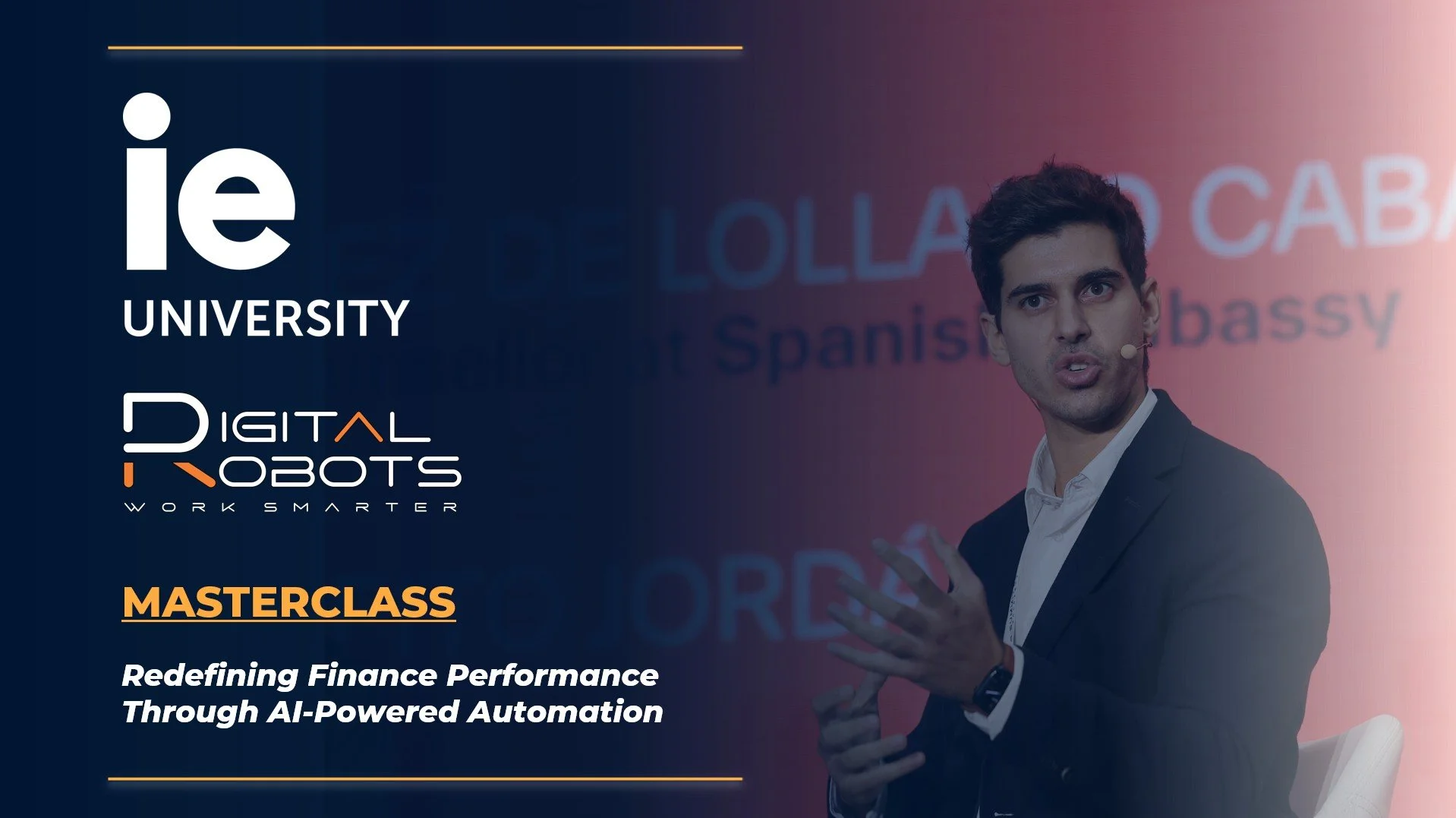
Practical AI for SMEs is no longer an abstract concept but has become a real lever for efficiency and competitiveness. This was explained by Alejandro Máñez, CEO and founder of Digital Robots, during his participation in the Conversational podcast of the Artificial Intelligence Cluster of the Community of Madrid. In an environment where many small and medium-sized enterprises still perceive artificial intelligence as complex or inaccessible, the conversation focused on how to apply AI and automation in a realistic way, with a direct impact on the business and without adding unnecessary complexity.
AI is no longer a myth and is becoming accessible to SMEs
One of the key messages of the episode was that artificial intelligence no longer belongs only to large corporations or R&D departments. Alejandro Máñez highlighted that today there is a range of mature, accessible, and scalable tools that allow SMEs to get started with specific projects. This view is backed up by academic studies: research from the University of St Andrews, based on an analysis of thousands of SMEs in the United Kingdom, shows that companies that adopt artificial intelligence solutions can achieve productivity improvements ranging from 27% to 133%, depending on the sector and type of application. These data reinforce the idea that practical AI for SMEs can generate visible results in relatively short timeframes when applied with focus and discernment.
Real-world use cases beyond generative AI
Based on Digital Robots' experience, the value of artificial intelligence is not limited to generative AI. During the podcast, specific use cases that are already working in SMEs were shared, such as the automation of invoice downloading and processing, the integration of internal systems, and the elimination of repetitive manual tasks. These types of initiatives reduce operational errors, improve information traceability, and free up team time for higher value-added activities. When well defined, these projects offer clear and measurable returns on investment and serve as a first step toward the progressive adoption of AI.
Common challenges and how to prioritize with impact
The conversation also addressed the main challenges that hinder the adoption of AI in SMEs. Santos Vicente, CEO of BiDATiA, emphasized data quality as one of the most common obstacles: without reliable data, technology loses its effectiveness. For his part, Alejandro Máñez pointed out that many SMEs are not fully aware of the potential already at their disposal, which limits the scope of their initiatives. Both agreed that trying to start with projects that are too large often creates friction, when in many cases it is the simplest tasks that offer the greatest return and a quick release of time.
In this context, Digital Robots supports companies from the initial discovery phase discovery, a service aimed at identifying and prioritizing processes with the greatest impact in the shortest time. Alejandro Máñez's participation in the podcast reinforces a central idea: practical AI for SMEs is already here, and the real challenge is not the technology, but knowing where to start to get real results.
Listen to the full episode
For those who want to delve deeper into the full conversation, the episode "Practical AI for SMEs: solutions that are already transforming businesses," from the podcast of the Artificial Intelligence Cluster of the Community of Madrid, is available on YouTube: https://youtu.be/B7bgefJw5P0
Related news