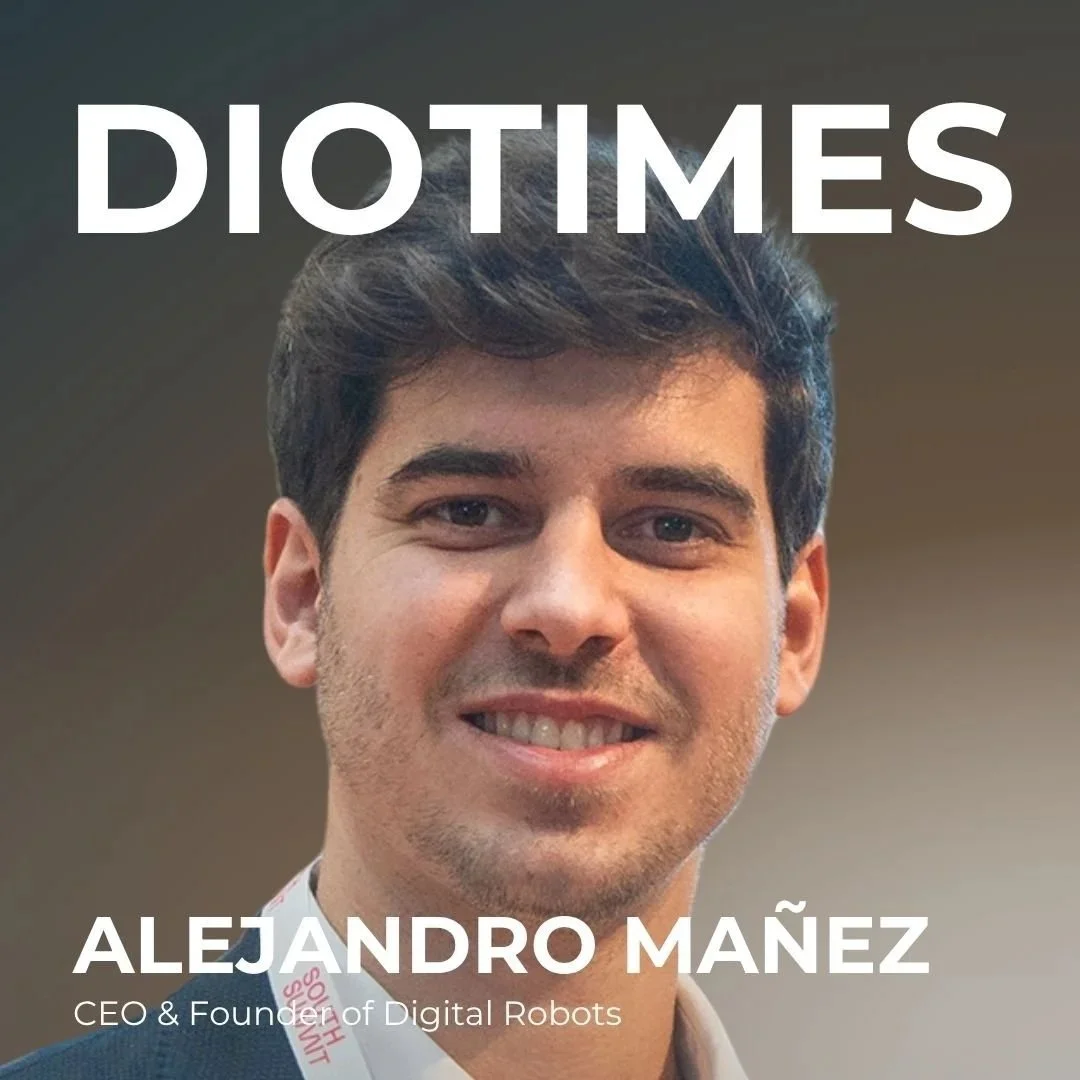
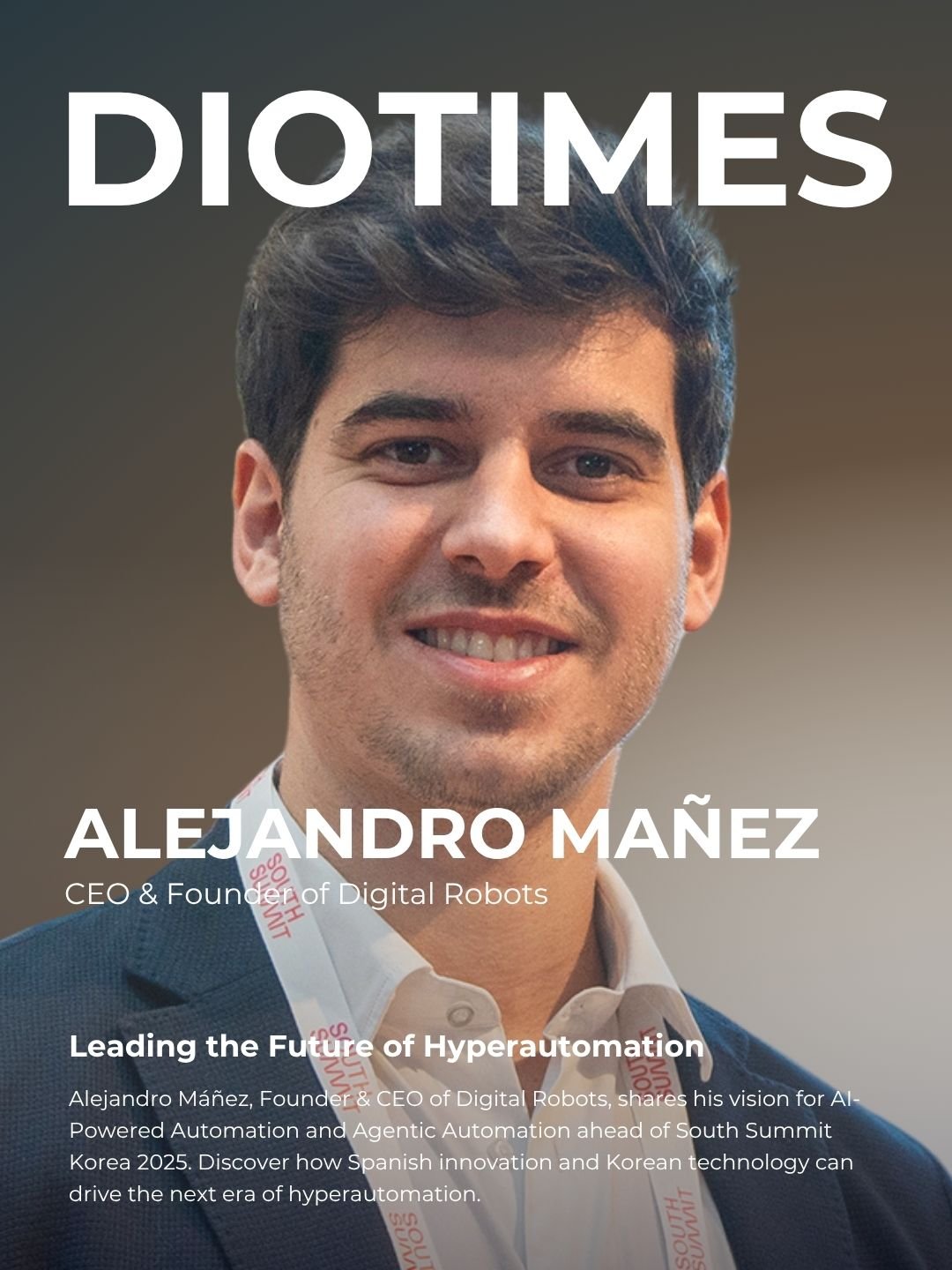
DIOTIMES interviews Alejandro Máñez: Digital Robots' vision of hyperautomation
Hyperautomation hyperautomation is establishing itself as one of the major drivers of business transformation globally. In an interview published by DIOTIMES, Alejandro Máñez, CEO and founder of Digital Robots, shares his vision of how the evolution of automation, driven by artificial intelligence, is enabling organizations to move from isolated initiatives to autonomous end-to-end operations with a real impact on business.
From traditional automation to a hyperautomation strategy
One of the key messages from the interview is that many companies continue to approach automation in a fragmented way. Alejandro Máñez explains that, although RPA has been an important first step, its true value comes when it is integrated into a broader hyperautomation strategy. This approach combines automation, artificial intelligence, and process orchestration to transform entire operations, not just individual tasks.
This evolution is backed up by market data. According to McKinsey & Company, organizations that scale end-to-end automation can achieve operating cost reductions of 20% to 30%, as well as significant improvements in efficiency and resilience. These metrics reinforce the idea that hyperautomation is not a technology trend, but a strategic decision.
Agentic Automation: the next step toward autonomous operations
During the conversation with DIOTIMES, Alejandro Máñez delves into the concept of Agentic Automation, a new generation of automation in which AI agents are capable of analyzing information, making decisions, and executing complex processes autonomously. Unlike traditional models, this approach allows for maintaining governance and strategic control of the business while operations are executed automatically and continuously.
Based on Digital Robots' experience, Agentic Automation is already being applied in real production environments and goes far beyond experimentation. It involves building scalable automation ecosystems that connect entire systems, equipment, and processes, turning automation into a driver of growth rather than just a tool for efficiency.
Scaling hyperautomation with a focus on real impact
Another key point in the interview is the challenge of scaling hyperautomation. Alejandro Máñez points out that the main barriers are not usually technological, but cultural and organizational. Resistance to change, the complexity of legacy systems, and the difficulty of identifying the right processes are common obstacles.
To overcome these challenges, Digital Robots works with a structured approach that begins with a phase of analysis and discoveryphase, aimed at identifying high-impact opportunities. From there, initiatives are prioritized and scaled progressively, ensuring clear metrics, adequate governance, and measurable results. This approach avoids oversized projects and ensures that hyperautomation is aligned with strategic business objectives. For Digital Robots, true leadership is not just about adopting the latest innovation, but about turning it into sustainable, scalable, and measurable value for organizations.
For those who wish to delve deeper into the conversation and learn all the details of Alejandro Máñez's vision, the full interview is available on DIOTIMES and can be read here:
https://diotimes.com/en/leaders/south-summit-korea-2025-alejandro-manez/
Related news