How to train internal teams for frictionless automation adoption

Integrating automation into an organization depends not only on the technology, but also on the real ability of internal teams to operate, improve and scale these solutions. When training is strategically designed, adoption is accelerated, errors are reduced and a culture where innovation becomes part of daily work is fostered.
Diagnose the starting point and align the training to the business.
Before launching any training program, it is key to measure current digital skills, fears and expectations. A good diagnosis allows prioritizing critical processes, outlining groups and defining clear learning objectives, connected to indicators such as productivity, quality and safety, avoiding generic courses that rarely generate visible changes.
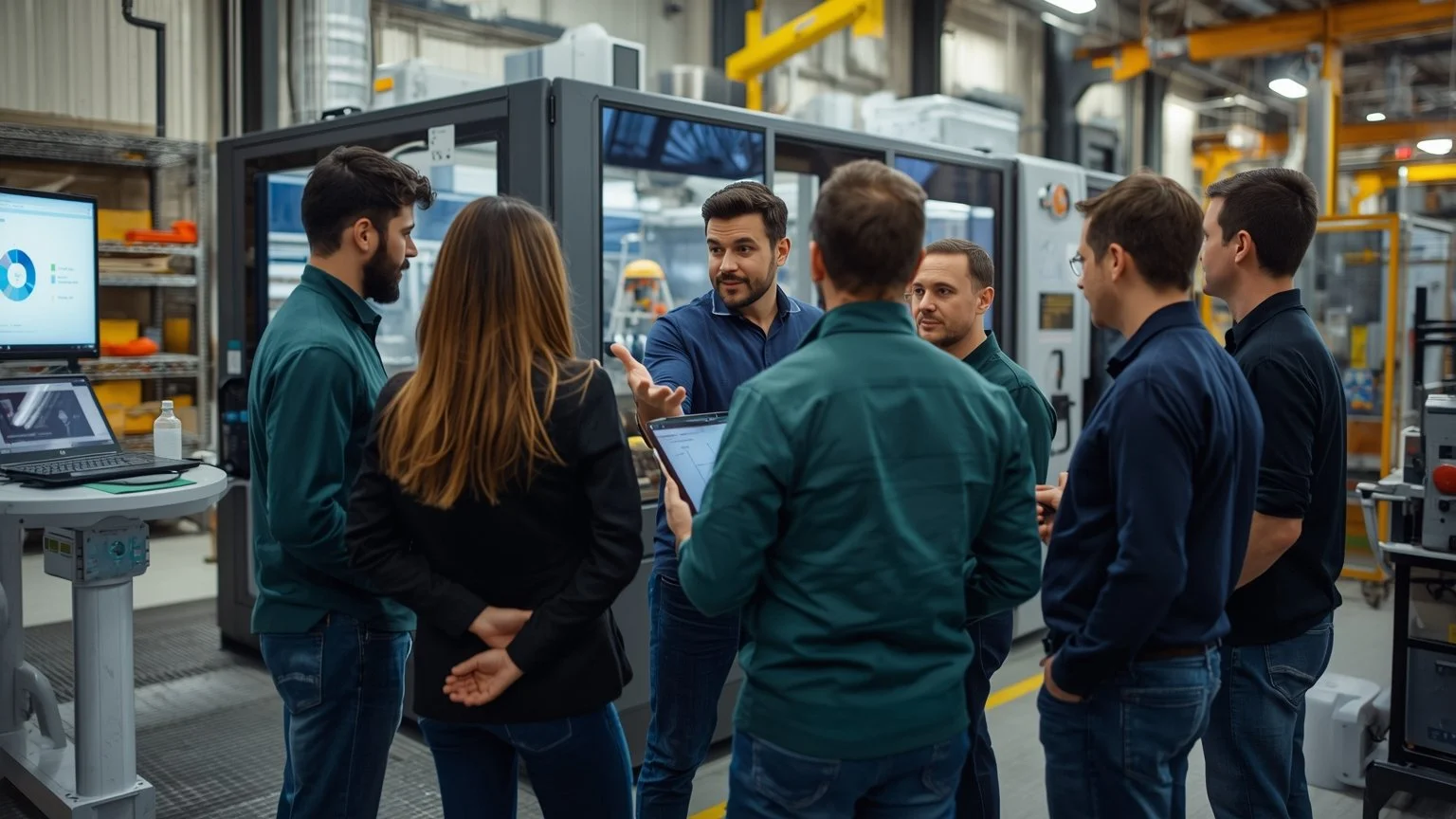
Design practical experiences with internal trainers and real cases.
Organizations that combine formal training with internal trainers achieve faster and more sustainable adoption. This mix allows contextualizing the content, providing ongoing support and facilitating the practical transfer of knowledge to the operational team.
Face-to-face guided sessions: instructor-led workshops that use real cases to practice and resolve doubts in real time.
Complementary online modules: asynchronous learning to standardize concepts, allow review and evaluate progress.
In-plant practice with real scenarios: exercises on equipment and processes that reproduce operating conditions to increase confidence and safety.
Focus on the impact of automation: train to understand how it affects decisions and results of the area, with metrics and continuous feedback.

Accompany change with continuous measurement and a culture of improvement.
Mature adoption of automation requires constant monitoring and open feedback channels. This allows frictions to be detected, impact to be measured and deviations to be corrected before they become entrenched.
Performance metrics: key KPIs (time, error rate, ROI) and dashboards for periodic review.
Communities of practice: forums and sessions to share best practices, solutions and lessons learned.
Recurrent micro-training: short training capsules to consolidate habits and update skills.
Feedback loops: short meetings, surveys and incident logging for quick adjustments and to reinforce team confidence.
When training is results-oriented, automation is no longer seen as a threat and becomes an ally of talent. Experiences where in-house trainers have trained more than 1,500 workers show how productivity rises as they gain mastery over the new control architectures. To design a customized plan and accompany this change, it is possible to contact Digital Robots and explore together the next step.
Related news