Attended robots as a key ally of automation in business
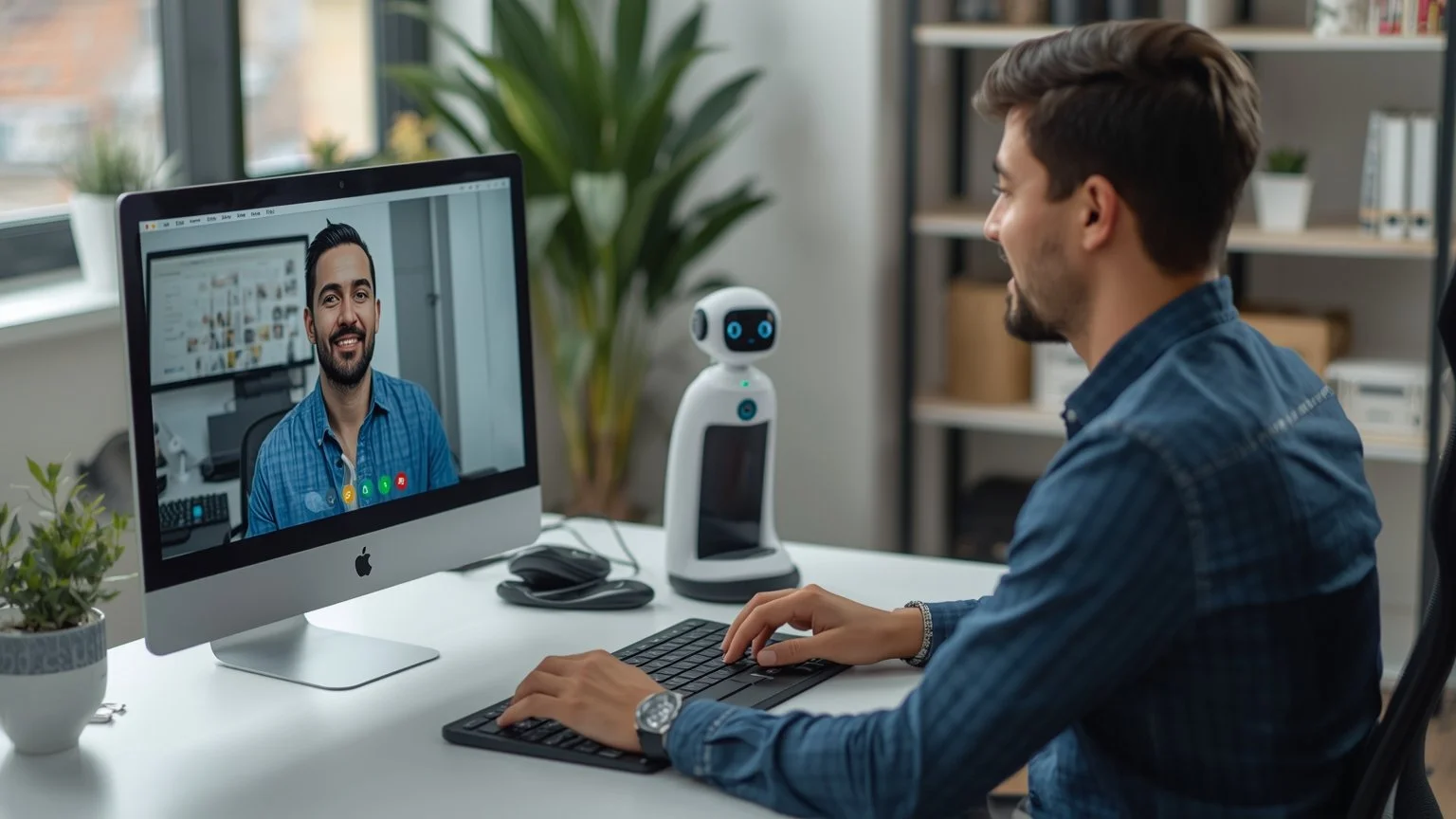
The keyword "attended robots" marks a shift in how automation is understood: it is no longer just about replacing tasks, but about accompanying employees in real time. According to recent data, organizations that combine attended and unattended automation achieve clear improvements in accuracy and response times (with measurable increases in productivity).
What are attended robots and when does it make sense to use them?
Attended robotsare software robots that run at the employee's workstation and are triggered on demand or in context, like a digital assistant operating on the same applications. They are ideal when the process requires human judgment, live customer interaction, or decisions that change dynamically on a case-by-case basis.

Real-world applications in front office and critical operations
In financial services, insurance, or telecommunications, attended robots are used to capture data, navigate multiple legacy systems, and generate reports in seconds while the agent converses with the customer. By operating in parallel, they accelerate workflow without replacing human interaction.
They reduce manual errors and improve record consistency, facilitating compliance and auditing.
They shorten call times, increasing productivity and allowing more cases to be handled per shift.
They free up capacity for agents to handle complex incidents that require empathy and analysis, improving satisfaction.
They integrate information from legacy systems and CRM to produce accurate reports in seconds and support quick decisions.

How to launch a hybrid assisted automation strategy
An effective strategy combines fully unattended processes with user-assisted automation, improving efficiency and enhancing both the employee and customer experience.
Map repetitive tasks in sales, customer service, and back office; prioritize by high volume and clear rules.
Run measurable pilots with KPIs (time, errors, savings) and acceptance criteria.
Scale desktop robots with orchestration, change control, and security.
Align IT, business, and data governance through policies, SLAs, and governance.
Automation assisted by attended robotsallows for the creation of jobs that are more focused on value and less on mechanical tasks, keeping professionals at the center of decision-making. To move forward, it is essential to identify specific use cases, measure results, and extend the model to more areas of the organization. To design this roadmap and implement solutions aligned with your objectives, you can contact Digital Robotsand explore the next level of automation together.
Related news